SQL As Understood By SQLite

Small. Fast. Reliable. Choose any three.
SQLite understands most of the standard SQL language. But it does omit some features while at the same time adding a few features of its own. This document attempts to describe precisely what parts of the SQL language SQLite does and does not support. A list of SQL keywords is also provided. The SQL language syntax is described by syntax diagrams.
The following syntax documentation topics are available (you may prefer to start with the much simpler cheat sheet, which contains appropriate links to entries below in the right-hand column):
- aggregate functions
- ALTER TABLE
- ANALYZE
- ATTACH DATABASE
- BEGIN TRANSACTION
- comment
- COMMIT TRANSACTION
- core functions
- CREATE INDEX
- CREATE TABLE
- CREATE TRIGGER
- CREATE VIEW
- CREATE VIRTUAL TABLE
- date and time functions
- DELETE
- DETACH DATABASE
- DROP INDEX
- DROP TABLE
- DROP TRIGGER
- DROP VIEW
- END TRANSACTION
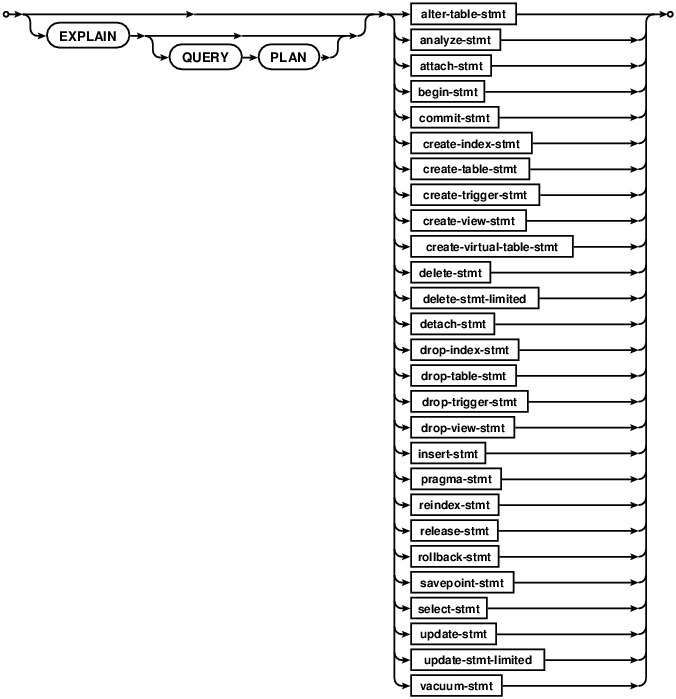
- EXPLAIN
- expression
- INDEXED BY
- INSERT
- keywords
- ON CONFLICT clause
- PRAGMA
- REINDEX
- RELEASE SAVEPOINT
- REPLACE
- ROLLBACK TRANSACTION
- SAVEPOINT
- SELECT
- UPDATE
- VACUUM
- WITH clause
The routines sqlite3_prepare(), sqlite3_exec(), and sqlite3_get_table() accept an SQL statement list (sql-stmt-list) which is a semicolon-separated list of statements.
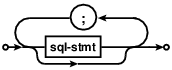
Each SQL statement in the statement list is an instance of the following: